Rosenberg Institute Seminar Series - Stuart Siegel
Overview
Stuart Siegel, PhD, SPWS
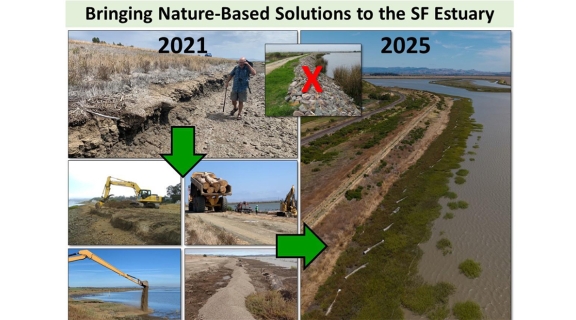
Two Birds, One Ecosystem – Bringing Nature-Based Solutions to the SF Estuary
Abstract: The San Francisco Estuary, like most estuaries globally, faces a combination of large-scale historic habitat loss and the modern threat of rising sea levels. This estuary has spent decades restoring its lost estuarine ecosystems and is a leader in driving the science and practice of large-scale restoration forward. The region’s citizens walk their talk – voters have passed billions in statewide and regional bonds and taxes. The region is very focused on planning for rising sea levels – every city and county in California must have its adaptation plan adopted by 2034 and the bay area is moving fast. The Bay Conservation and Development Commission recently estimated a $109 billion price tag, likely an underestimate. The January 2026 tidal flooding has been a wake-up call. Enter estuarine ecosystems – subtidal mudflats, eelgrass beds, oyster reefs, tidal marshes, upland ecotones, open waters, and in some places beaches and creek mouths. These habitats give us many “ecosystem services” in addition to their myriad ecological functions. “Nature-based” shoreline protection is recognized as a significant and vital service in high demand today. Delivering on this opportunity is the challenge. There is science and adaptive management – what works where, under what circumstances, what do our projects teach us, how do we disperse knowledge. There is engineering – converting knowledge into constructable designs. There is regulatory – the webs of environmental regulation in the U.S. derive from hazards of the past not the present. There is the funding – planning, design, permitting, construction, assessment. And there is the land and project sponsors – some entity must step up and make projects happen. And we are rising to these challenges – making projects happen in ways and places previously thought out of our reach.
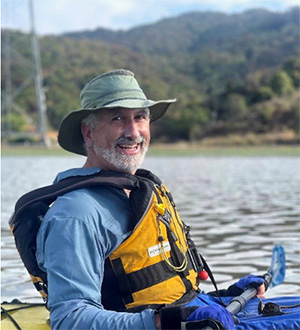
Bio: Dr. Siegel focuses on the intersection of climate change adaptation, ecosystem conservation, restoration, and resilience, natural and nature-based infrastructure, and regional planning, with a focus on the San Francisco Estuary. Over his 40-year career, Dr. Siegel has worked on numerous restoration projects large and small, integrating innovative “nature-based” strategies that utilize marsh ecosystems to yield ecological benefits, carbon storage, and flood and erosion protection for the built environment. He has served as a lead science advisor for the Suisun Marsh Plan, Delta Vision’s ecosystem team, and the Delta Regional Ecosystem Restoration Implementation Plan, and the Integrated Regional Wetland Monitoring Pilot Project. He regularly serves on project and regional technical advisory and steering committees. Dr. Siegel is the Coastal Resilience Specialist for the SF Bay NERR and Adjunct Professor in SFSU’s School of the Environment. Dr. Siegel is a Senior Professional Wetland Scientist and received his Master’s and Ph.D. in Geography and his B.A. in Environmental Science and B.S. in Chemistry, all from UC Berkeley.
Tags